

 A smart lock is an electronic access control system that replaces traditional keys with digital credentials such as fingerprint, PIN, RFID card, or mobile app, allowing access to be managed, monitored, and controlled remotely or locally.
What Is a Smart Lock?
A smart lock is an electronic access control device that replaces or enhances traditional mechanical locks by enabling access through digital credentials instead of physical keys.
Unlike conventional locks, smart locks integrate mechanical security with digital identity verification, allowing users to control access based on authorization rather than key ownership.
In practical use, smart locks support multiple unlocking methods :
Fingerprint
PIN code
RFID card
Mobile app
Face recognition
This flexibility makes smart locks widely used in homes, apartments, hotels, offices, and commercial projects.
How Does a Smart Lock Work?
A smart lock operates through three coordinated systems: authentication, verification, and mechanical execution.
Authentication Layer
When a user attempts to unlock the door, the system receives a credential input. This may include biometric data, a PIN code, an RFID card, or an app-based authorization token.
Each credential is securely stored either locally within the lock or within a centralized system.
Verification Layer
The lock’s internal processor verifies the credential using encrypted algorithms such as AES. In connected systems, this process may also involve communication with a cloud or property management system.
If the credential matches authorized data, the system proceeds to the next step.
Mechanical Unlocking
A motor inside the lock activates and drives the latch or mortise mechanism, physically unlocking the door.
This process replaces the traditional key-turning action with controlled electromechanical movement.
What Makes Smart Locks Different from Traditional Locks?
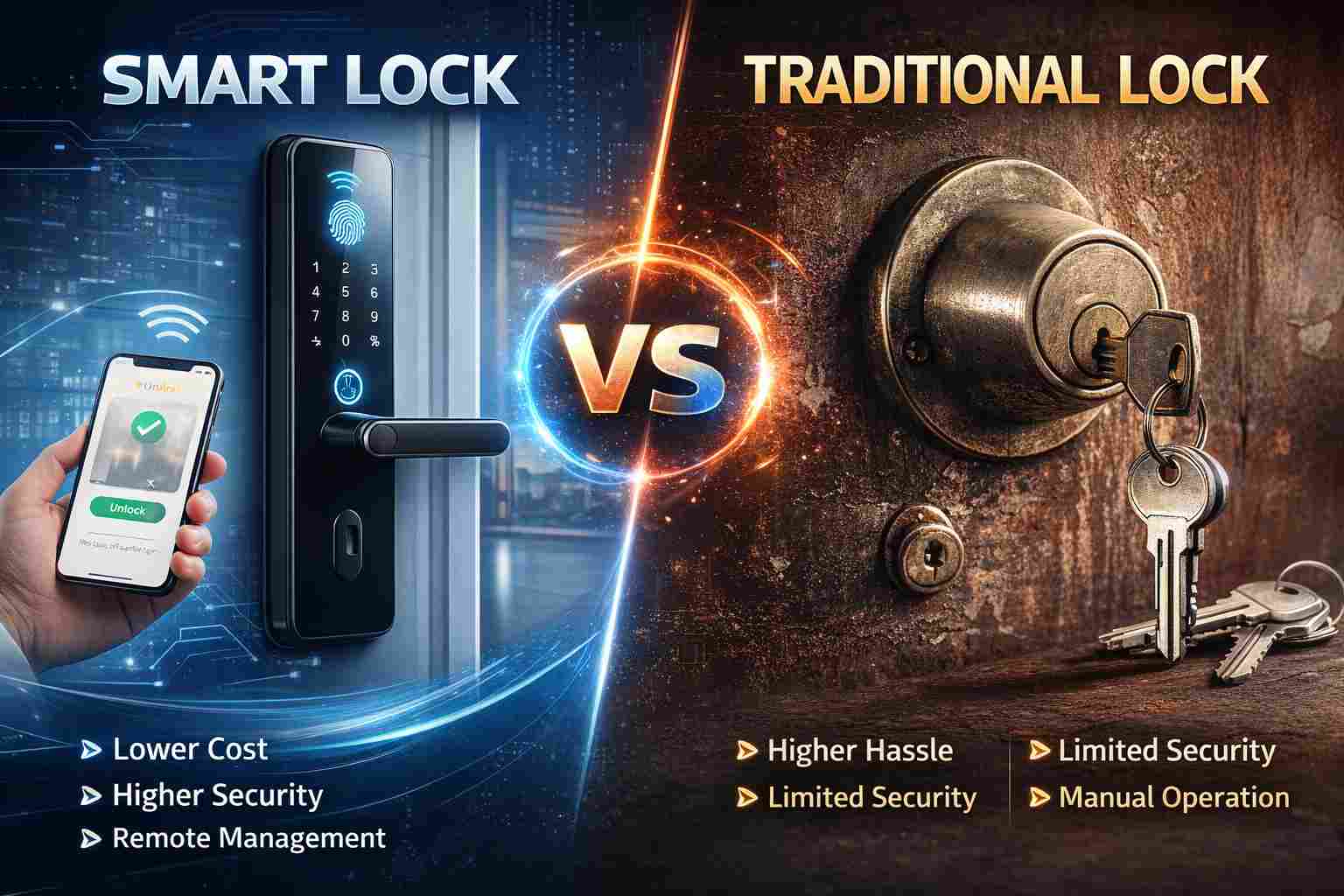
| Feature | Smart Lock | Traditional Lock |
| Access Control | Digital | Physical key |
| Management | Remote / centralized | Manual |
| Security | Multi-layer | Mechanical |
| Scalability | High | Low |
The fundamental difference lies in how access is controlled.
Traditional locks rely on physical keys, while smart locks rely on identity verification.
This enables several key advantages:
- Access can be granted or revoked instantly
- Permissions can be time-limited
- Entry records can be tracked
- Multiple users can be managed without duplicating keys
For commercial environments such as hotels and rental properties, this significantly reduces operational complexity and cost.
More about smart lock vs traditional lock, visit our blog, click here:
Inside a Smart Lock: Key Components Explained
Understanding internal components helps evaluate product quality and long-term reliability.
Mechanical Lock Body (Security Foundation)
The lock body determines resistance to physical attacks such as prying or drilling.
Common types include mortise locks, deadbolts, and euro cylinders. Among these, mortise structures provide the highest level of security and are widely used in commercial applications.
Electronic Control Unit (System Brain)
The control board manages credential storage, access logic, and motor activation. It also handles communication with external systems such as mobile apps or hotel software.
High-quality locks use industrial-grade chips to ensure long-term stability.
Communication Module (Connectivity Layer)
Smart locks may include different communication technologies depending on use case:
- Bluetooth for local control
- WiFi for remote access
- RFID for card-based systems
- Matter, Zigbee, or Thread for smart home integration
The choice of communication method directly affects system performance and scalability.
Power System (Reliability Layer)
Most smart locks are powered by batteries, typically lasting 6–12 months.
Advanced systems include low-battery alerts, emergency power ports, and backup mechanical keys to ensure uninterrupted operation.
Are Smart Locks Safe?
Smart lock security consists of both digital and physical protection layers.
Digital Security
Modern smart locks use encrypted communication protocols to protect credential transmission and prevent unauthorized access.
Physical Security
The mechanical structure remains critical. A high-quality mortise lock provides strong resistance against forced entry.
Real-World Risk Perspective
In most cases, physical attacks on weak lock structures are more common than digital hacking.
Therefore, overall security depends on both system design and hardware quality.
Do Smart Locks Need WiFi?
Smart locks do not require WiFi to function.
They can operate in three modes:
- Offline (e.g., RFID hotel locks)
- Bluetooth-based (local control)
- WiFi-connected (remote access)
WiFi is only necessary when remote control or cloud-based management is required.
What Happens If the Battery Dies?
Smart locks are designed with multiple fail-safe mechanisms.
Users typically receive low-battery warnings well before power depletion. In emergency situations, external power ports or backup mechanical keys allow temporary access.
This ensures that users are not locked out.
Types of Smart Locks (By Application)
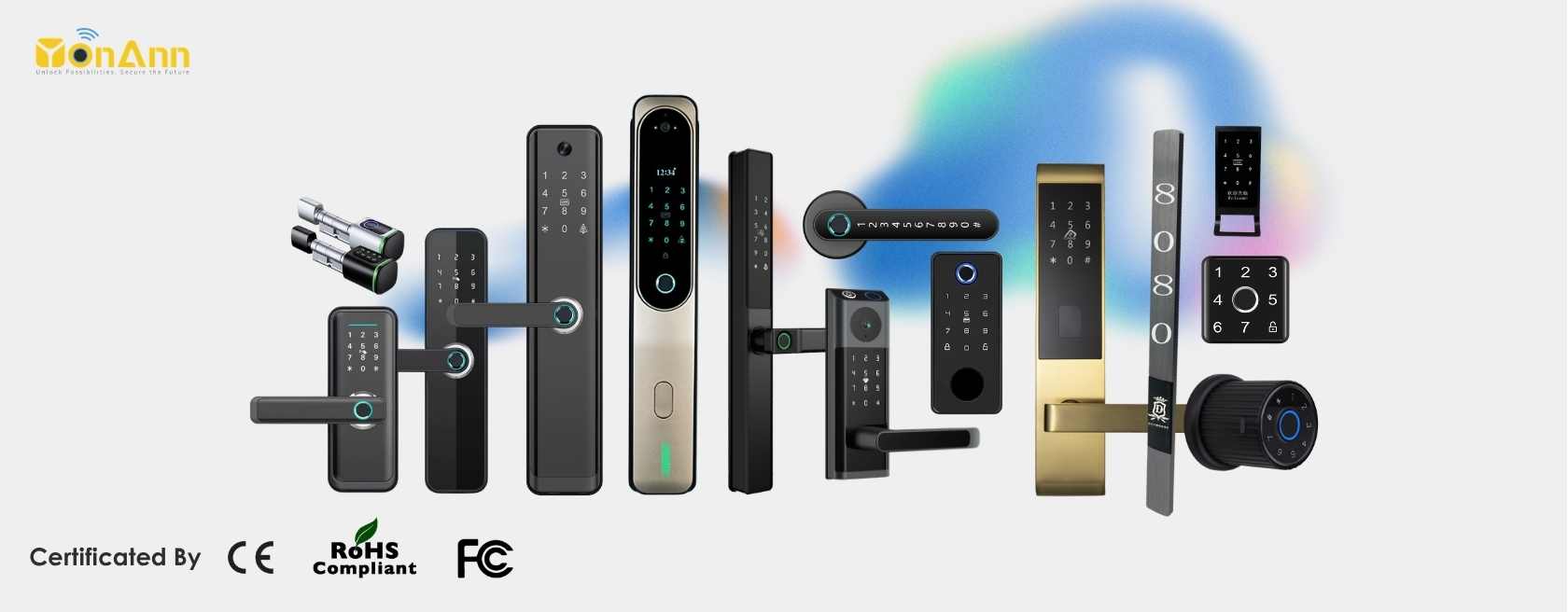 Residential Smart Locks
Best for homes, focuse on convenience and easy installation.
Apartment Smart Locks
Designed for Airbnb and rentals with remote access control.
Hotel Smart Locks
RFID-based systems designed for:
- Fast check-in
- Centralized management
- High reliability
Matter Smart Locks
Future-ready locks compatible with:
- Apple Home
- Google Home
- Alexa
Do Smart Locks Need WiFi?
No, smart locks do not require WiFi.
They can work in:
- Offline mode (RFID hotel locks)
- Bluetooth mode
- WiFi mode (for remote control)
👉 Hotels typically prefer offline systems for stability.
Are Smart Locks Safe?
Smart locks provide multi-layer protection:
Digital Security
- Encrypted communication
- Secure credential storage
Physical Security
- Anti-drill mortise
- Reinforced structure
👉 In reality, physical attacks are more common than hacking.
Where Are Smart Locks Used?
Smart locks are widely deployed across multiple sectors:
- Residential homes
- Rental apartments
- Hotels and resorts
- Office buildings
- Co-working spaces
- Industrial facilities
- Public locker systems
Their adoption continues to grow as buildings become more digitized.
How to Choose the Right Smart Lock
Identify Your Scenario
Home, apartment, or hotel projects require different systems.
Check Door Compatibility
Ensure correct:
- Door thickness
- Mortise size
Define System Requirements
- Remote control?
- Central management?
Choose a Reliable Supplier
System compatibility and long-term support are critical.
Common Mistakes When Buying Smart Locks
Many project failures result from avoidable mistakes:
- Choosing based on price alone
- Ignoring system compatibility
- Mixing products from different suppliers
- Not confirming installation requirements
Careful planning is essential for long-term success.
Smart Lock Solution for Projects
For commercial projects, smart locks should be considered as part of a complete system rather than standalone products.
Professional solutions typically include:
- Lock hardware
- Access credentials (cards, app, etc.)
- Management software
- Supporting devices (encoder, gateway, etc.)
Companies like YonAnn provide integrated solutions designed for stability, compatibility, and scalability in real-world projects.
YonAnn provides:
- Hotel RFID lock systems
- TTLock smart lock solutions
- OEM / ODM customization
- Multi-system compatibility
If you are looking for a smart lock supplier or project Solution?
- ✔ Full system support (lock + software)
- ✔ OEM / ODM available
- ✔ Fast delivery
- ✔ Global project experience
👉 Contact us now to get catalogue & quotation
The Future of Smart Locks
Smart locks are evolving toward:
- Matter interoperability
- Cloud-based management
- AI-driven access control
They are becoming a core component of smart buildings.
Conclusion
Smart locks are transforming access control from mechanical systems into intelligent digital infrastructure.
They improve:
- Security
- Efficiency
- User experience
For businesses, they are not just an upgrade — they are a long-term investment.
 English
  Russian
  Spanish
  Arabic
  Vietnamese