

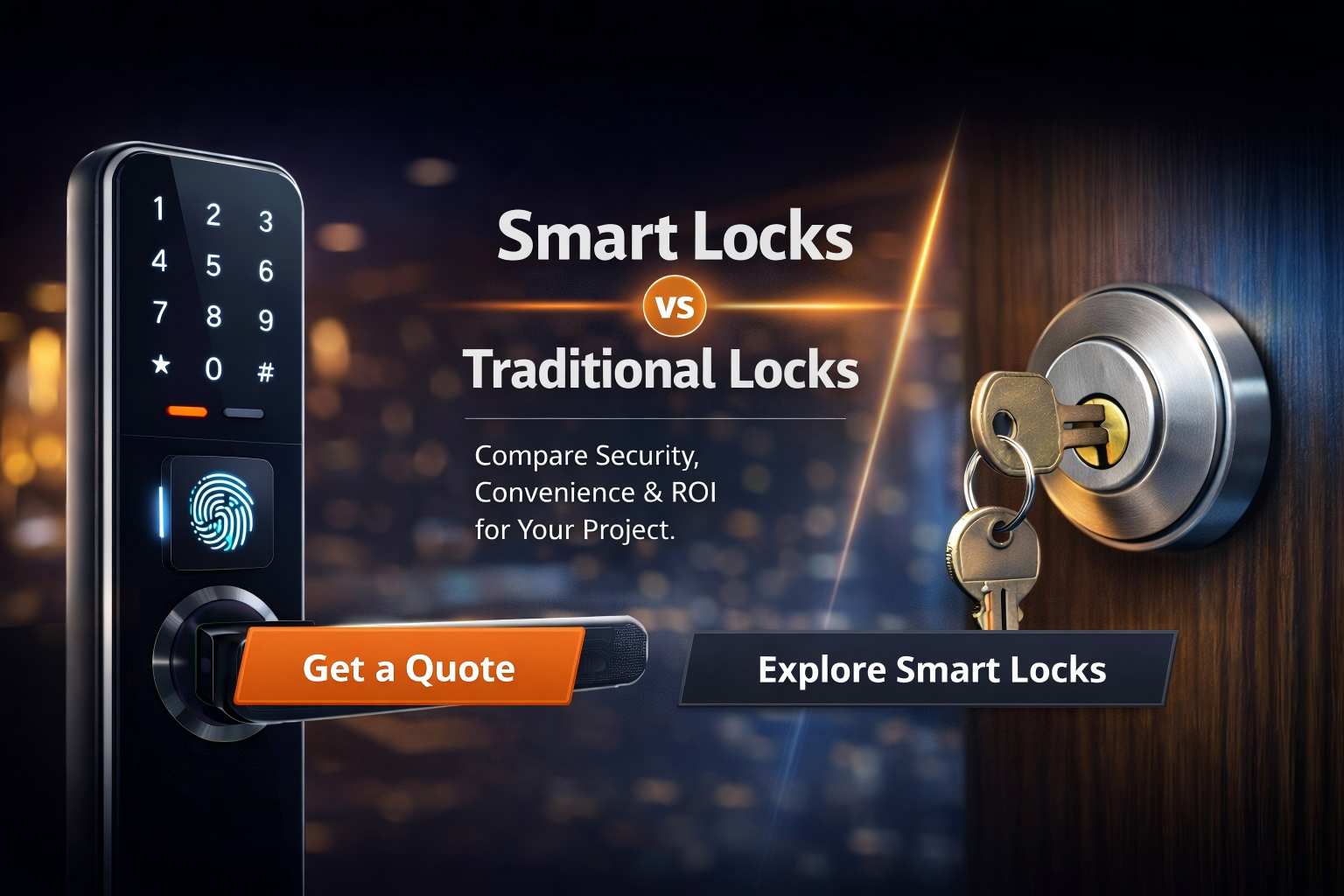
What Are Traditional Locks?
Traditional locks rely on physical keys and mechanical components such as cylinders, pins, and springs. Common types include:
-
Mortise locks
-
Cylinder locks
-
Padlocks
-
Keyed hotel locks
They have been used for decades and remain widespread in residential and commercial buildings.
Advantages of Traditional Locks
-
Simple structure, easy to understand
-
Low upfront cost
-
No power or battery required
-
Familiar to all users
Limitations of Traditional Locks
-
Keys can be lost, copied, or stolen
-
No access records or audit trail
-
Rekeying is time-consuming and costly
-
Limited scalability for hotels or apartments
What Are Smart Locks?
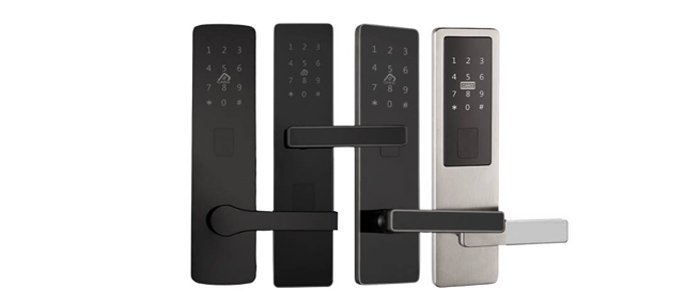
Smart locks are electronic or electromechanical locks that allow access through digital credentials instead of (or in addition to) physical keys. Depending on the model, smart locks support:
-
Fingerprint recognition
-
RFID cards (MIFARE, Temic, etc.)
-
PIN codes
-
Mobile apps (Bluetooth / Wi-Fi)
-
Cloud-based management systems
Smart locks are widely adopted in hotels, serviced apartments, rental properties, offices, and modern homes.
Smart Locks vs Traditional Locks: Key Comparison
-
Security Level
Traditional Locks
-
Depend entirely on key control
-
Vulnerable to lock picking, key duplication, and unauthorized access
Smart Locks
-
Multi-factor authentication (fingerprint + card + PIN)
-
Encrypted communication protocols
-
Auto-locking and tamper alerts
-
Access logs for full traceability
✅ Winner: Smart Locks
-
Convenience & User Experience
Traditional Locks
-
Require physical keys at all times
-
Lockouts are common
-
Key management becomes difficult with multiple users
Smart Locks
-
Keyless entry
-
Remote access and temporary passwords
-
Ideal for hotels, Airbnb, and property management
✅ Winner: Smart Locks
-
Management & Scalability
Traditional Locks
-
Manual key issuing and collection
-
Rekeying is needed when staff or tenants change
-
Not suitable for large-scale operations
Smart Locks
-
Centralized software or app control
-
One-click user authorization or deletion
-
Easy integration with PMS, gateways, and elevator systems
✅ Winner: Smart Locks
-
Cost: Short-Term vs Long-Term
Traditional Locks
-
Lower initial purchase cost
-
Higher long-term maintenance and labor costs
Smart Locks
-
Higher upfront cost
-
Reduced operational expenses over time
-
Lower risk of security incidents
📌 For hotels and apartments, smart locks usually offer a better ROI within 1–2 years.
-
Application Scenarios
| Scenario | Better Choice |
| Private residence (basic use) | Traditional / Smart |
| Hotels & resorts | Smart Locks |
| Serviced apartments | Smart Locks |
| Rental properties (Airbnb) | Smart Locks |
| Office buildings | Smart Locks |
| Remote property management | Smart Locks |
Why the Market Is Shifting Toward Smart Locks
From a global perspective, smart locks are becoming the standard, not the exception. Key drivers include:
-
Growth of smart homes and IoT ecosystems
-
Rising labor costs in hotel operations
-
Demand for contactless access
-
Higher expectations for security and convenience
Governments and commercial projects in the Middle East, Europe, Southeast Asia, Africa, and South America are increasingly specifying smart door locks in new developments.
How YonAnn Bridges the Gap
At YonAnn, we understand that different markets and projects have different needs. That’s why we offer:
-
Smart locks with fingerprint, RFID, PIN, Bluetooth, and Wi-Fi
-
Compatibility with TTLock, Tuya, and hotel PMS systems
-
High-quality materials such as 304 stainless steel, zinc alloy, aluminum CNC
-
OEM / ODM solutions for distributors and brands
-
Reliable options for hotels, apartments, villas, and commercial projects
Whether you are upgrading from traditional locks or planning a new smart access system, YonAnn provides scalable and future-ready solutions.
Final Verdict: Smart Locks or Traditional Locks?
If your priority is basic access at the lowest upfront cost, traditional locks still work.
If you value security, efficiency, modern user experience, and long-term savings, smart locks are the clear choice.
👉 In 2026 and beyond, smart locks are not just an upgrade — they are a strategic investment.
Looking Ahead
As smart cities, smart hotels, and smart homes continue to expand, access control will become increasingly digital, connected, and data-driven. Choosing the right locking technology today ensures your property stays competitive tomorrow.
If you need professional advice on selecting the right smart lock solution for your market or project, YonAnn is ready to support you.
 English
  Russian
  Spanish
  Arabic
  Vietnamese