

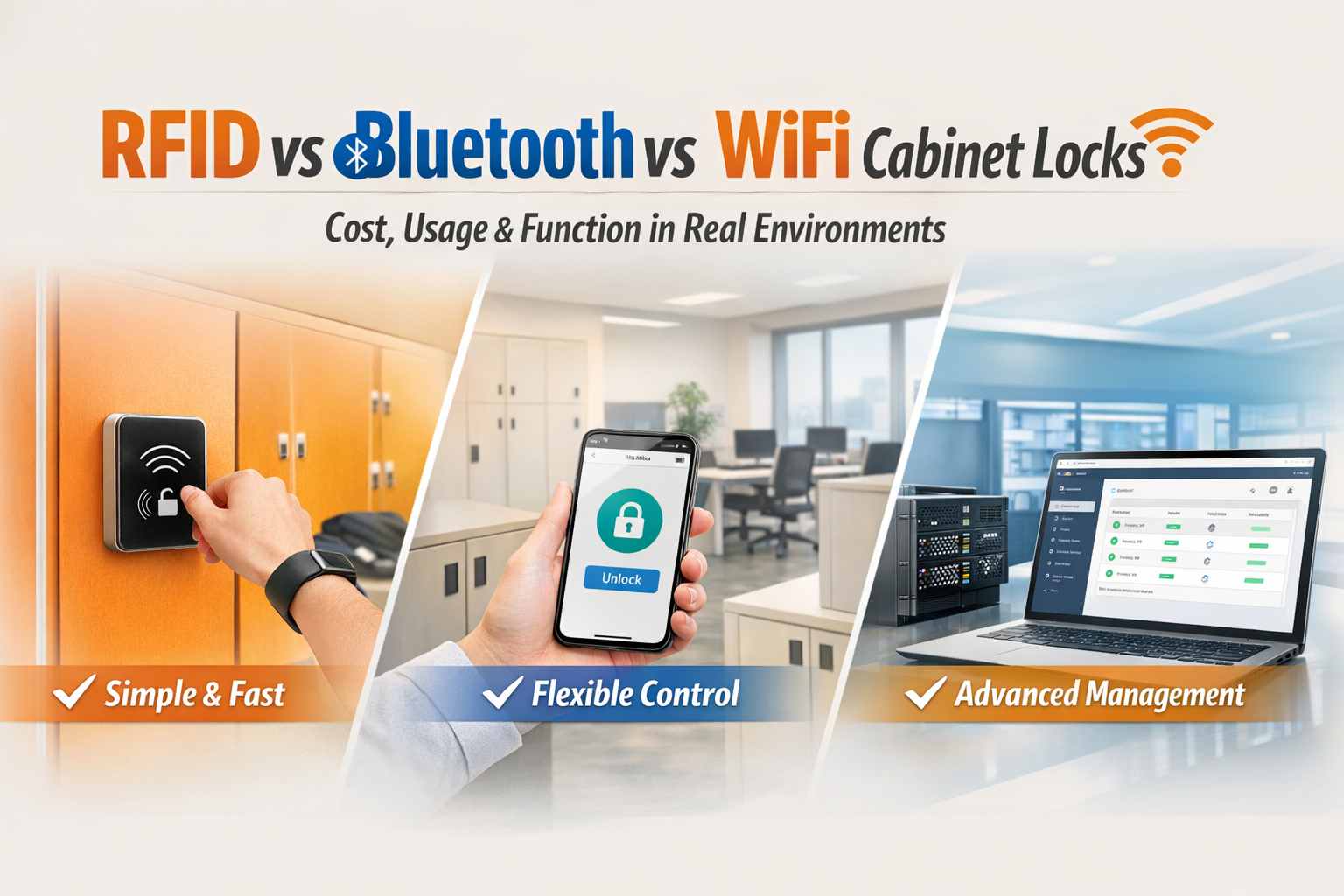
 RFID vs Bluetooth vs WiFi cabinet locks is one of the most common comparisons when choosing a smart cabinet lock solution.
When people compare RFID, Bluetooth, and WiFi cabinet locks, they often believe they are choosing between three technologies.
In reality, they are choosing between three completely different ways of running a space.
And this difference only becomes visible after installation, when the locks are no longer products, but part of daily operations.
At trade shows like the China International Furniture Fair, it is easy to get convinced by feature sheets. Everything looks advanced. Everything seems flexible. Everything appears “smart.”
But once deployed into offices, gyms, or shared environments, the question changes from:
“What can this lock do?”
to:
“How does this lock behave every day?”
That is where the real differences begin.
Most buyers start at a price per unit. RFID looks cheap, Bluetooth looks reasonable, and WiFi looks expensive. That part is obvious.
What is less obvious is that the purchase price is usually the smallest part of the cost.
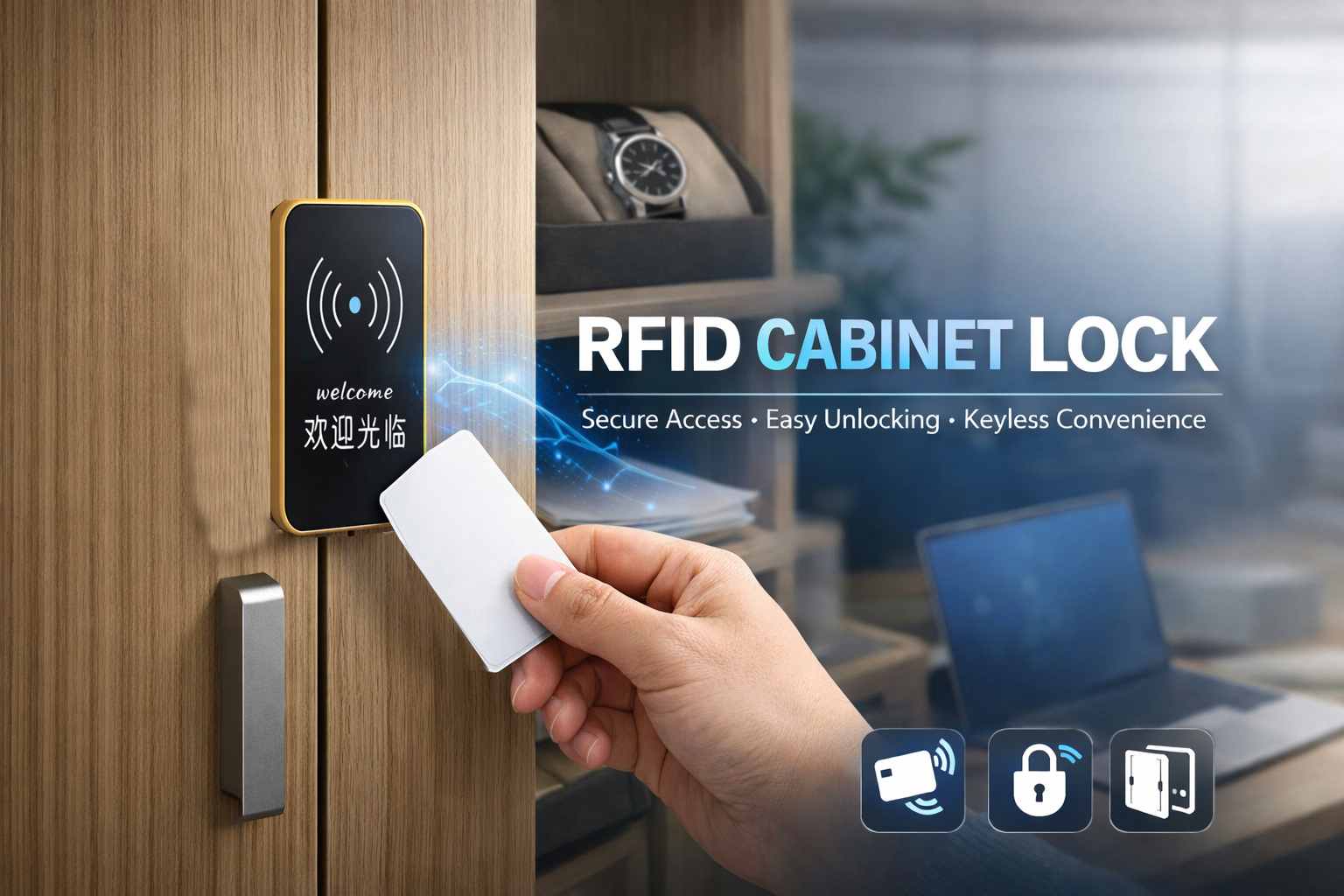
In a gym using RFID locks, there is almost nothing to manage after installation. Users tap, open, leave. Staff do not need to explain anything. There are no apps, no permissions, no system training. The lock disappears into the background, which is exactly what you want.
Now imagine the same gym using WiFi locks. The hardware cost is higher, but that is not the real issue. The real issue is that now you need a stable network, you need to consider signal coverage, you need someone who understands how to configure the system, and you need to deal with situations where the network is unstable, but the user still wants to open a locker immediately.
The cost has shifted from hardware to operations.
Bluetooth sits in between. It removes the need for physical key management and gives flexibility, but introduces a different type of cost—user interaction. People need to understand how to use an app, how to receive access, how to interact with the lock. This is not a problem in offices, but it can become a friction in environments where users are temporary or unfamiliar with the system.
So when comparing cost, the real question is not “which is cheaper,” but:
“How much management does this lock introduce into my daily workflow?”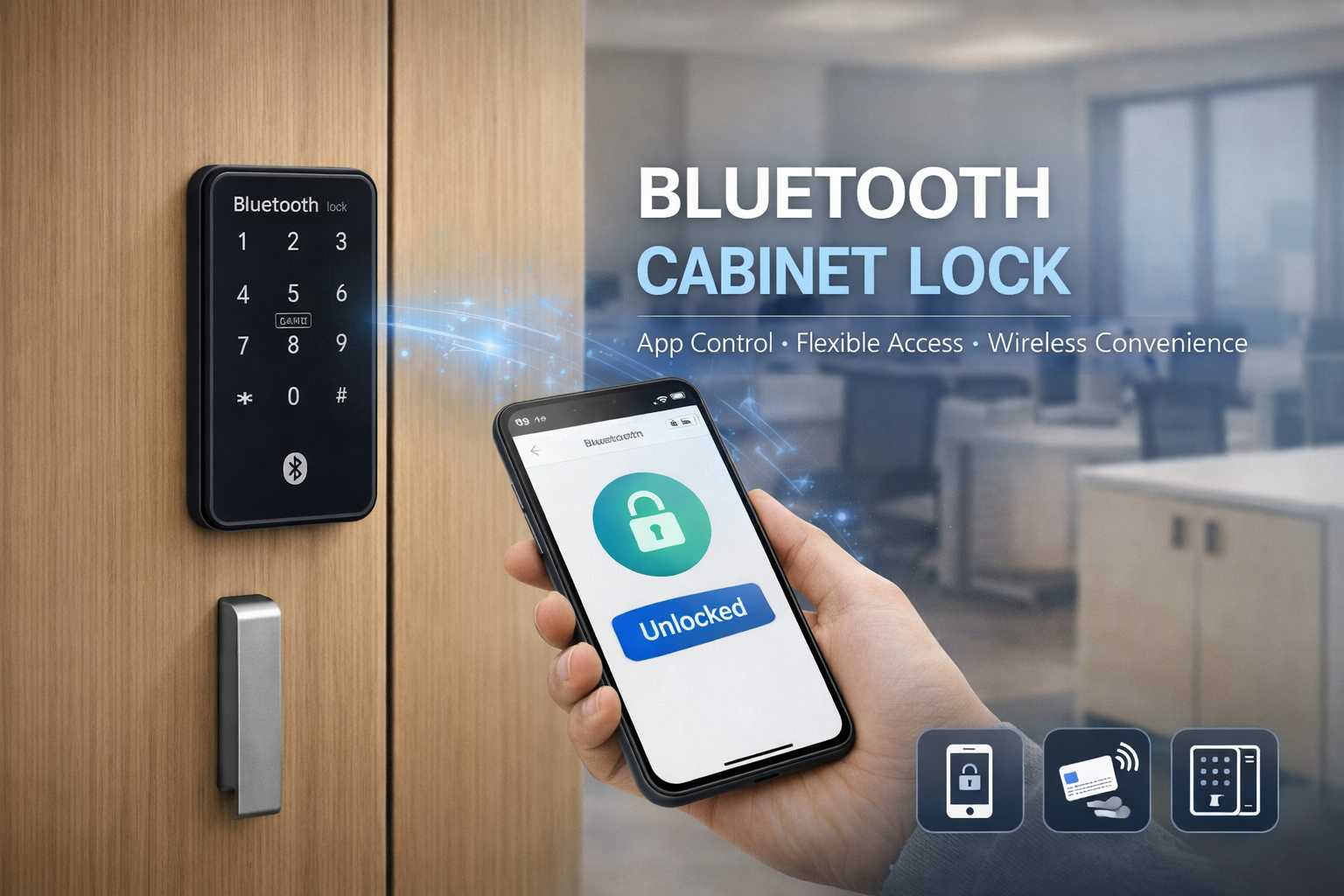
The Same Lock Can Feel Perfect or Completely Wrong — Depending on the Scene
A lock does not exist in isolation. It exists inside a behavior pattern.
In a gym locker room, people move quickly. They do not want to think. They do not want instructions. They want something that works immediately. RFID succeeds here not because it is advanced, but because it matches human behavior. Tap, open, done. The simplicity is not a limitation—it is the reason it works.
Take that same RFID lock into a co-working space, and suddenly it feels outdated. Users change every day, access needs to be reassigned, sometimes remotely, sometimes instantly. Without the ability to control access dynamically, the system becomes rigid. Staff starts compensating manually, and the lock becomes a bottleneck instead of a solution.
Now look at Bluetooth in that same co-working space. It fits naturally. Access can be given for a few hours, extended if needed, or revoked instantly. The lock adapts to the user flow instead of forcing the user to adapt to the lock.
But move Bluetooth into a high-traffic public locker environment, and the experience changes again. Now you depend on users having phones, understanding apps, and interacting correctly under time pressure. What felt flexible in an office starts to feel complicated in a gym.
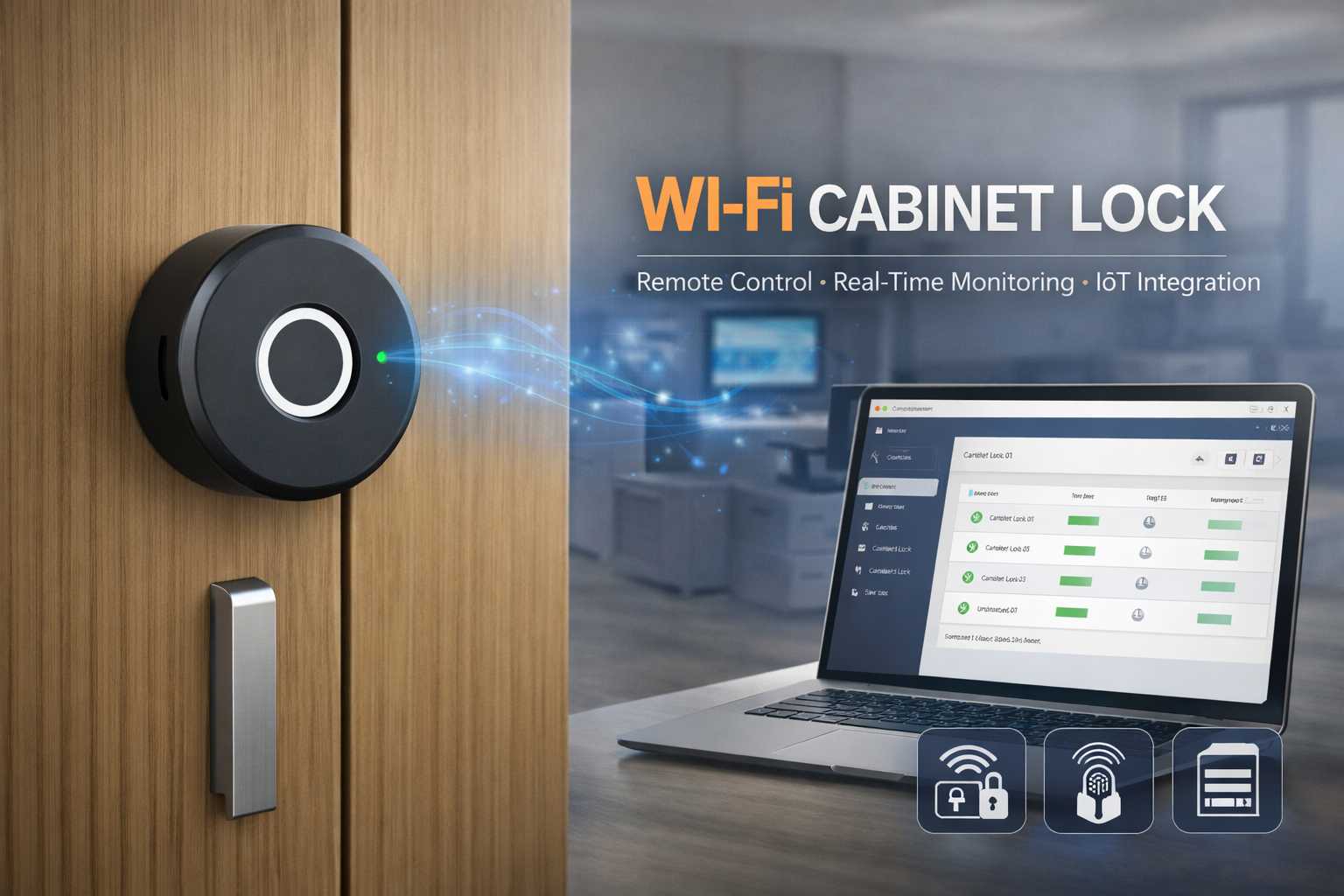
WiFi takes this even further. In a centralized storage system or a smart building, WiFi locks make sense because they allow control from a distance. You can manage access across locations, track usage, and integrate with other systems. In this context, the complexity is justified because the system itself requires it.
But in a simple cabinet or locker project, WiFi often introduces more layers than the environment can support. The lock becomes more intelligent than the problem it is trying to solve.
Function Is Not About Features — It Is About Control
From a technical perspective, the difference between RFID, Bluetooth, and WiFi is often described in terms of features. But in practice, what matters is how much control each system gives you—and how much of that control you actually need.
RFID gives you access. Nothing more, nothing less. It is stable because it does not try to do anything beyond that. There is no flexibility, but there is also no confusion. It is predictable, and in many environments, predictability is more valuable than intelligence.
Bluetooth introduces control at the user level. You can decide who gets access, when they get it, and for how long. This changes how spaces are used. Cabinets are no longer fixed assets assigned permanently to one person—they become flexible resources that can be shared and reassigned without physical intervention.
WiFi expands this control to the system level. Now you are not just managing individual users, but entire environments. You can monitor usage, manage multiple locations, and integrate with other digital systems. But with this level of control comes a dependency on infrastructure, stability, and system design.
The important realization is that more function is not always better. It is only better if the environment can actually use it.
 Where Most Decisions Go Wrong
A pattern appears in many projects. Buyers associate higher technology with better solutions.
WiFi sounds more advanced than Bluetooth. Bluetooth sounds more advanced than RFID.
So they choose based on perceived level, not actual fit.
But in real usage, the opposite often happens.
A simple RFID lock in a gym creates a smooth, effortless experience.
A Bluetooth lock in an office creates flexibility and efficiency.
A WiFi lock in a smart system enables centralized control.
But when these are mismatched, problems appear immediately. Systems feel heavy, users get confused, and operations become more complicated than before.
The issue is not technology itself. It is the mismatch between technology and usage.
What Experienced Buyers Understand
After working on a few projects, the decision process changes.
Instead of asking which lock is better, experienced buyers start by observing how the space is used.
They look at how often users change, how quickly access needs to be granted, whether control needs to be centralized, and how much complexity the environment can realistically handle.
Only after that do they choose technology.
And very often, the conclusion is not the most advanced option, but the most appropriate one.
A Practical Way to Think About It
If the environment is fast, simple, and repetitive, the lock should disappear into the background. That is where RFID excels.
If the environment requires flexibility and user-level control, the lock should adapt to people. That is where Bluetooth fits naturally.
If the environment is part of a larger system, the lock becomes a node in a network. That is where WiFi makes sense.
Final Thought
RFID, Bluetooth, and WiFi cabinet locks are not steps in a hierarchy.
There are different answers to different questions.
The best choice is not the one with the most features, or the highest price, or the most advanced technology.
It is the one that fits so naturally into your application that users don’t notice it—and operations don’t have to work around it.
That is when a lock stops being a product and starts becoming part of a system that actually works.
Choosing between RFID, Bluetooth, and WiFi cabinet locks depends on your application, cost expectations, and system requirements.
 English
  Russian
  Spanish
  Arabic
  Vietnamese